If your business already has a Google Business Profile, you may wonder whether there is any reason to create listings elsewhere.
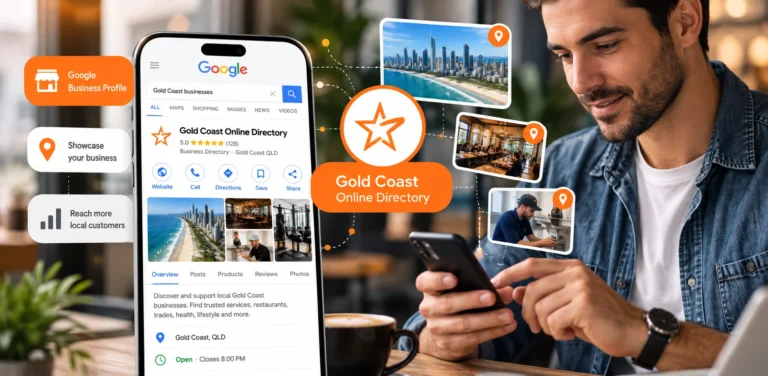
Google Business Profile gives eligible businesses a way to manage key information that appears across Google Search and Maps. An online business directory serves a different purpose, providing a dedicated place where visitors can discover and compare businesses by categories, industries or locations.
For Gold Coast businesses, using both can create different points of discovery while helping customers find consistent information about your business.
Understanding the role of each platform can help you decide how they fit into your wider online presence.
What Is a Google Business Profile?
A Google Business Profile allows eligible businesses to manage how key business information appears across Google Search and Maps.
Depending on the business and available features, a profile can contain information such as:
- Business name
- Primary and additional categories
- Address or service area
- Opening hours
- Phone number
- Website
- Photos
- Customer reviews
- Business updates
This information can help customers understand what a business offers, where it operates and how to make contact.
If someone searches directly for your business or for relevant local products and services, your Google Business Profile may be one of the places where they encounter your business information.
Google also accounts for a substantial share of search activity in Australia. The Australian Competition and Consumer Commission reported that Google held nearly 94% of Australia’s general search market as of August 2024.
Keeping the profile accurate and current should therefore form part of maintaining your local online presence.
What Is an Online Business Directory?
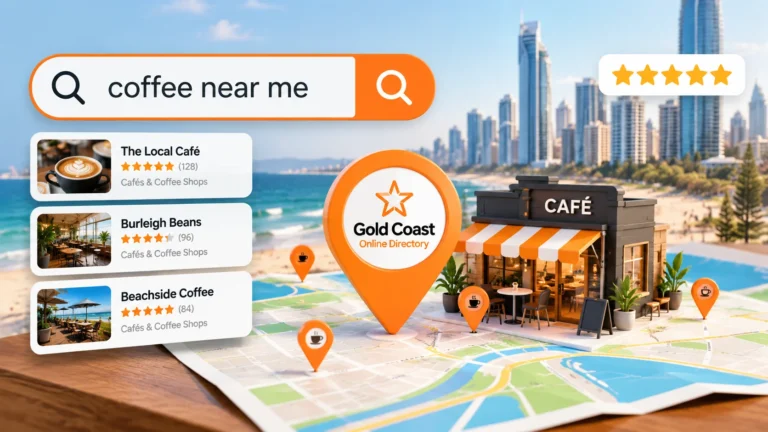
An online business directory organises businesses into categories, industries or locations.
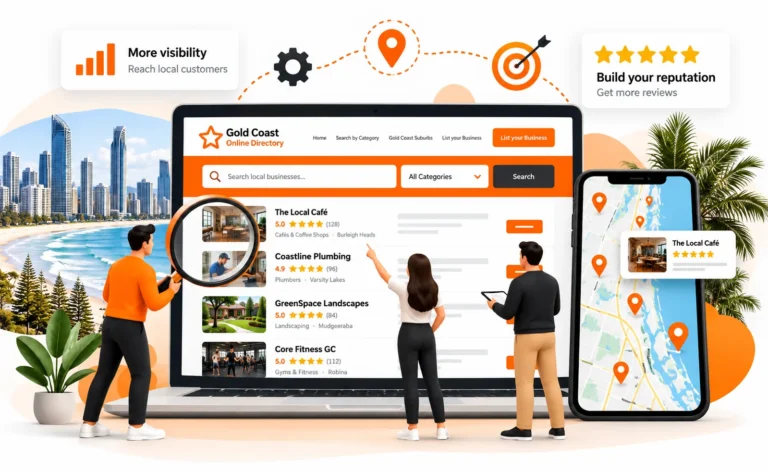
A Gold Coast business directory, for example, provides a dedicated place for visitors to explore businesses operating within the local area.
Someone may use a directory because they need a particular type of provider but have not yet chosen a specific company.
They might browse categories such as:
- Trades
- Restaurants
- Professional services
- Health and fitness
- Automotive businesses
- Retailers
- Accommodation
- Home services
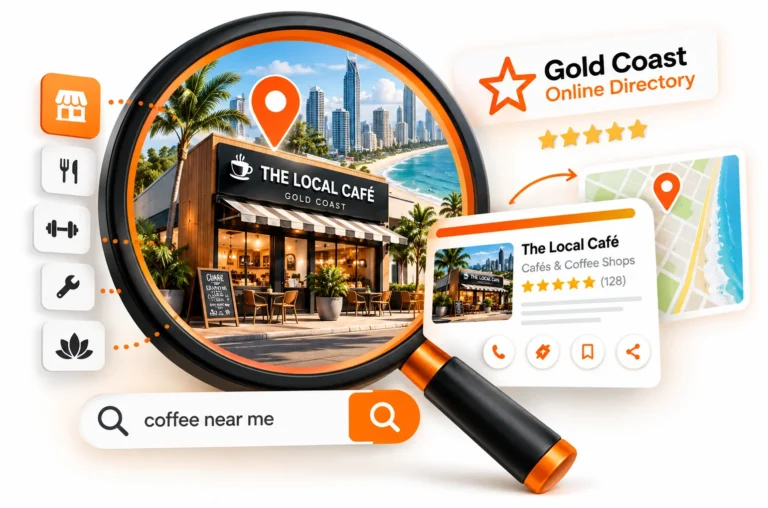
A business listing can provide information such as a description, website, contact details, location and categories, depending on the directory and the features it provides.
The key difference is context: a directory is specifically organised around finding and browsing business listings.
Google Business Profile vs Online Business Directory
Google Business Profile and online business directories can both contribute to your online presence, but they operate in different environments.
| Feature | Google Business Profile | Online Business Directory |
| Main environment | Google Search and Maps | Dedicated directory website |
| Business information | Supported | Depends on the directory |
| Business categories | Supported | Typically part of directory organisation |
| Website link | Supported | Depends on the directory |
| Contact information | Supported | Depends on the directory |
| Customer reviews | Supported | Depends on the directory |
| Business discovery | Search and Maps environment | Directory browsing and categories |
| Geographic context | Connected with Google’s local environment | May focus on a particular location or market |
| Business description | Supported | Depends on the directory |
| Online presence | Within Google’s ecosystem | Separate website or platform |
The important point is that these are not identical profiles on identical platforms.
Each can play a different role in how people encounter and research a business online.
1. Customers Do Not All Search the Same Way
People can take different routes when looking for a local business.
One customer might use Google Maps to look for a nearby restaurant. Another might browse a local business directory by category. Someone else may first encounter a business through its website, a review platform, social media or a recommendation.
Maintaining accurate profiles across the platforms that genuinely matter to your customers gives them different ways to reach your business information.
This can be particularly useful when someone knows the type of product or service they need but does not already have a specific company in mind.
The goal is not to appear on every available platform. It is to maintain useful information in the places where it makes sense for your business to have a presence.
2. A Directory Provides a Separate Discovery Channel
Google Business Profile operates within Google’s Search and Maps environment.
A local business directory exists separately and is organised specifically around business listings.
Someone visiting a Gold Coast directory may browse businesses according to location or category, review available profiles and then continue to a business website or contact option where those features are available.
This gives the directory a distinct role within the research process.
Rather than duplicating Google Business Profile, a directory can provide a separate place where a business is represented.
3. Directories Let Customers Browse by Category
Search engines and directories can present businesses in different ways.
Directories are commonly structured around business categories, allowing visitors to move through groups of related businesses.
A customer might select a category and explore several businesses without initially looking for a particular company.
This can be useful when someone knows the type of product or service they need but is still considering which provider to investigate.
The categories selected for a listing therefore matter.
Choose categories that accurately represent your main business activities. Avoid adding loosely related categories simply to appear in more sections.
Accurate categorisation makes the profile more useful to people browsing that part of the directory.
4. Both Profiles Can Send Customers to Your Website
Your website gives you greater control over how your products, services and business information are presented.
Where website links are available, Google Business Profile and online directory listings can provide routes from an external profile to your own website.
Once there, the visitor can access whatever information and functionality your website actually provides.
Depending on the site, that might include:
- Service information
- Product information
- Pricing
- Previous work
- FAQs
- Quote requests
- Booking options
- Enquiry forms
Not every website provides all of these features. The important point is to direct visitors to a useful, current destination.
Check links periodically and make sure they lead to the correct page.
5. Consistent Listings Help Customers Confirm Business Information
Potential customers may encounter the same business on several platforms while researching their options.
Consistent factual information makes that process easier.
Your core business details should remain accurate across your website, Google Business Profile and relevant directory listings.
Check your:
- Business name
- Address or service area
- Phone number
- Website
- Opening hours
- Main services
If one profile displays different information from another, customers may be unsure which details are current.
This is particularly important after a significant business change, such as moving premises, changing a phone number, updating opening hours or launching a new website.
The descriptions do not need to be identical everywhere. The underlying facts should be accurate.
6. Local Directories Provide Geographic Context
A directory focused on the Gold Coast places listed businesses within a specific geographic context.
That is different from a general online platform because the directory itself is organised around a defined local market.
For a business serving Gold Coast customers, this can provide a logical place to present information about where the business operates.
Your individual listing should still make your location or service area clear.
For example, a mobile service business may work across several Gold Coast suburbs, while a business with physical premises may primarily serve customers from a particular location.
Only list areas you genuinely service.
Accurate geographic information helps visitors determine whether the business is relevant to their needs.
7. You Reduce Dependence on a Single Platform
Online platforms change over time.
Search results evolve, platform features can change and businesses regularly update how they market themselves online.
Maintaining a presence across several appropriate channels means your business information is not confined to one platform.
Depending on your business and customers, your online presence might include:
- Your website
- Google Business Profile
- Local business directory listings
- Relevant industry directories
- Customer review profiles
- Social media accounts where appropriate
There is no need to maintain profiles everywhere.
Focus on channels that have a genuine connection with your business, location, industry or customers, and keep those profiles accurate.
How the Main Channels Differ
| Channel | Primary role | What it can help customers do |
| Business website | Detailed business information | Learn more about your products, services and business |
| Google Business Profile | Presence across Google Search and Maps | Find key business and location information |
| Local business directory | Category and local business discovery | Browse businesses within a location or category |
| Industry directory | Industry-specific discovery | Find businesses within a particular field |
| Review platform | Customer research | Read available customer feedback |
| Social media | Additional business presence | View updates and other published business content |
These channels serve different purposes. The appropriate mix depends on the individual business and where it makes sense to maintain an active, accurate presence.
Does an Online Directory Replace Google Business Profile?
For many local businesses, it is more useful to think about Google Business Profile and online directories as different channels rather than direct substitutes.
Google Business Profile provides a business presence within Google’s Search and Maps environment.
A local online directory provides a separate profile within a platform organised around business listings, locations or categories.
Your website serves another purpose again, giving you control over the detailed information and functionality available to visitors.
Used together, these channels can form different parts of a broader local online presence.
That does not mean every business needs to appear on every directory. The directory should still be relevant to your location, industry or intended audience.
What Information Should Be Consistent Across Both?
Your descriptions do not need to be identical across every platform.
Your core factual information, however, should be accurate and current.
| Business information | What to check |
| Business name | Use your genuine trading name consistently |
| Address | Make sure the location is current |
| Service area | List areas you genuinely service |
| Phone number | Use an active business contact number |
| Website | Link to the correct live website |
| Opening hours | Keep applicable hours current |
| Categories | Select categories that accurately reflect your business |
| Services | Make sure your main offerings reflect what you currently provide |
Review these details whenever there is a significant change within the business.
Consistency is primarily about preventing customers from encountering conflicting factual information.
Where Does Your Website Fit In?
Google Business Profile and directory listings can introduce people to your business, but your website gives you greater control over what they find next.
Depending on the business, your website might contain detailed service pages, product information, project examples, team information, FAQs, booking functionality or enquiry forms.
The exact customer journey will vary.
Someone might discover a business through a directory and then visit its website. Another person might first encounter the business through Google and later look at reviews or other profiles.
Rather than assuming everyone follows the same path, maintain accurate information across the online channels that are relevant to your business.
That gives potential customers consistent information as they conduct their own research.
Add Another Local Visibility Channel
Google Business Profile and online business directories serve different purposes.
One provides a business presence within Google’s Search and Maps environment. The other can provide a separate place where visitors browse businesses by location, category or industry.
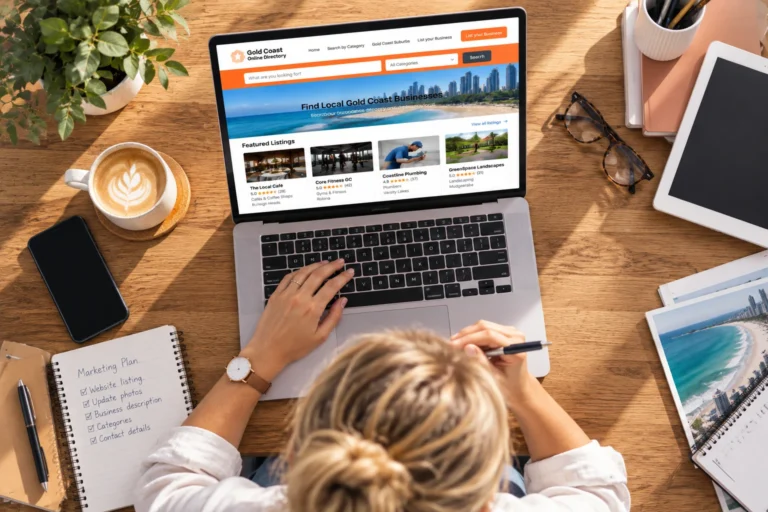
Gold Coast Online Directory provides a dedicated environment for businesses operating across the Gold Coast, with listings organised into business categories.
If you decide to create a listing, complete your profile carefully, select accurate categories and keep your website and contact information current.
Add your business to Gold Coast Online Directory.